

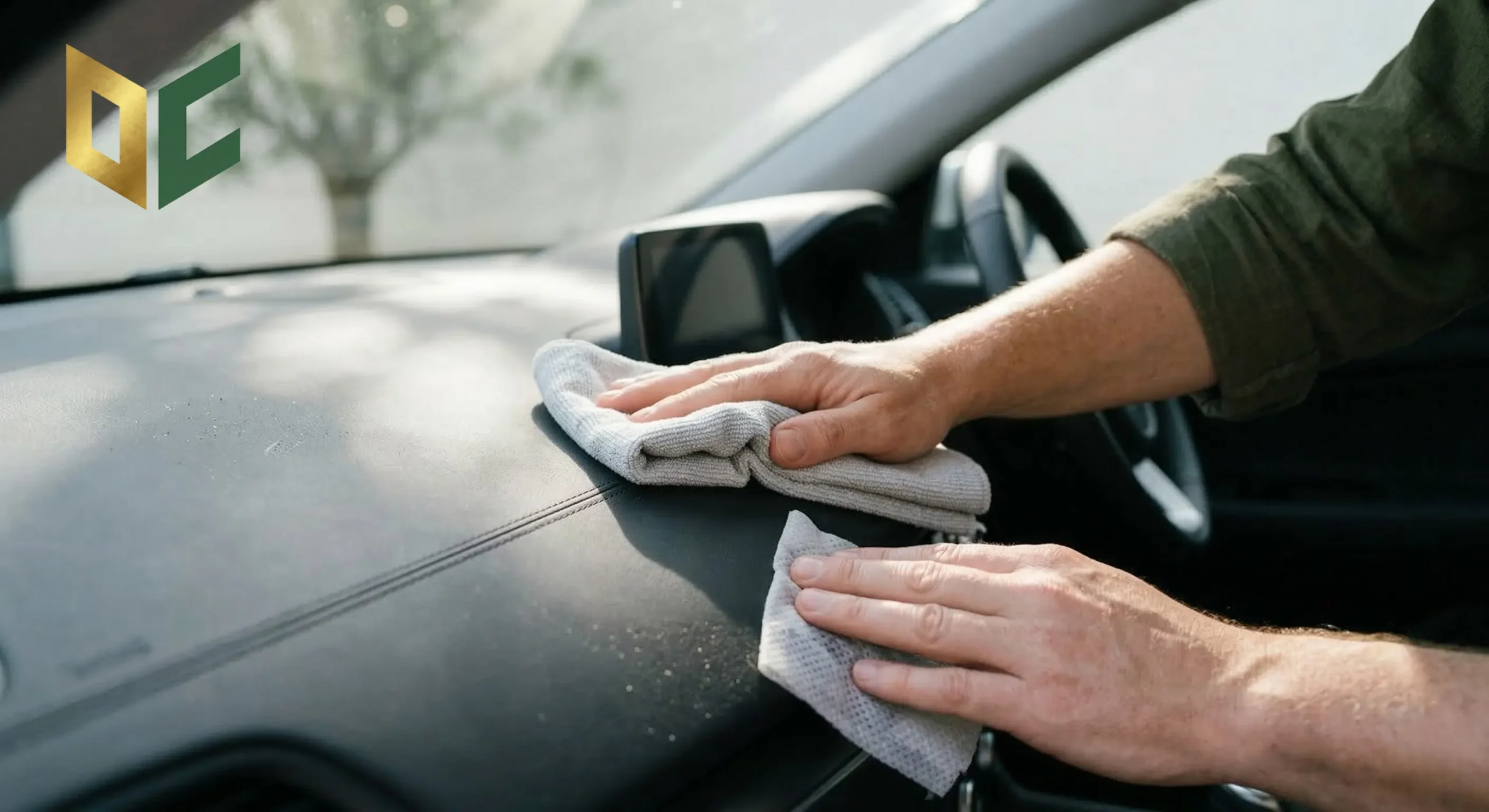
Your car dashboard faces daily stress.
Heat from the sun. Dust from open windows. Natural skin oils from your hands. Over time, this exposure leads to fading, stickiness, and sometimes even cracking plastic.
Many car owners make one mistake — they reach for the nearest household cleaner.
But dashboards are not kitchen counters.
If you’re wondering how to clean car dashboard safely without causing fading, slippery shine, or long-term damage, you’re in the right place. In this guide, we’ll walk you through what causes dashboard wear, why harsh cleaners make it worse, and the safest modern approach to maintaining your car interior.
Because the real question isn’t just how to clean it — it’s how to protect it.
Why Dashboards Get Sticky, Faded & Dusty
Before choosing a cleaner, it helps to understand what’s actually happening to your dashboard.
1. Heat Exposure & UV Damage
Dashboards sit directly under the windshield, absorbing intense sunlight. Over time, UV exposure breaks down plastic polymers, leading to fading and brittleness.
2. Body Oils & Touch Contact
Steering adjustments, touchscreen use, and general handling transfer oils from your skin. These oils mix with dust and create a sticky residue.
3. Dust Layering
Dust particles enter through vents and windows. When combined with humidity and oils, they settle into textured surfaces.
4. Poor Cleaning Habits
Using the wrong product can accelerate cracking and dullness.
That’s why safe car interior cleaning requires a more thoughtful approach than simply spraying and wiping.
Why Harsh Cleaners Damage Car Interiors
Many traditional cleaning sprays contain:
- Alcohol
- Ammonia
- Strong detergents
- Over-foaming surfactants
While these ingredients cut grime quickly, they can:
- Dry out plastic
- Strip protective coatings
- Cause micro-cracks
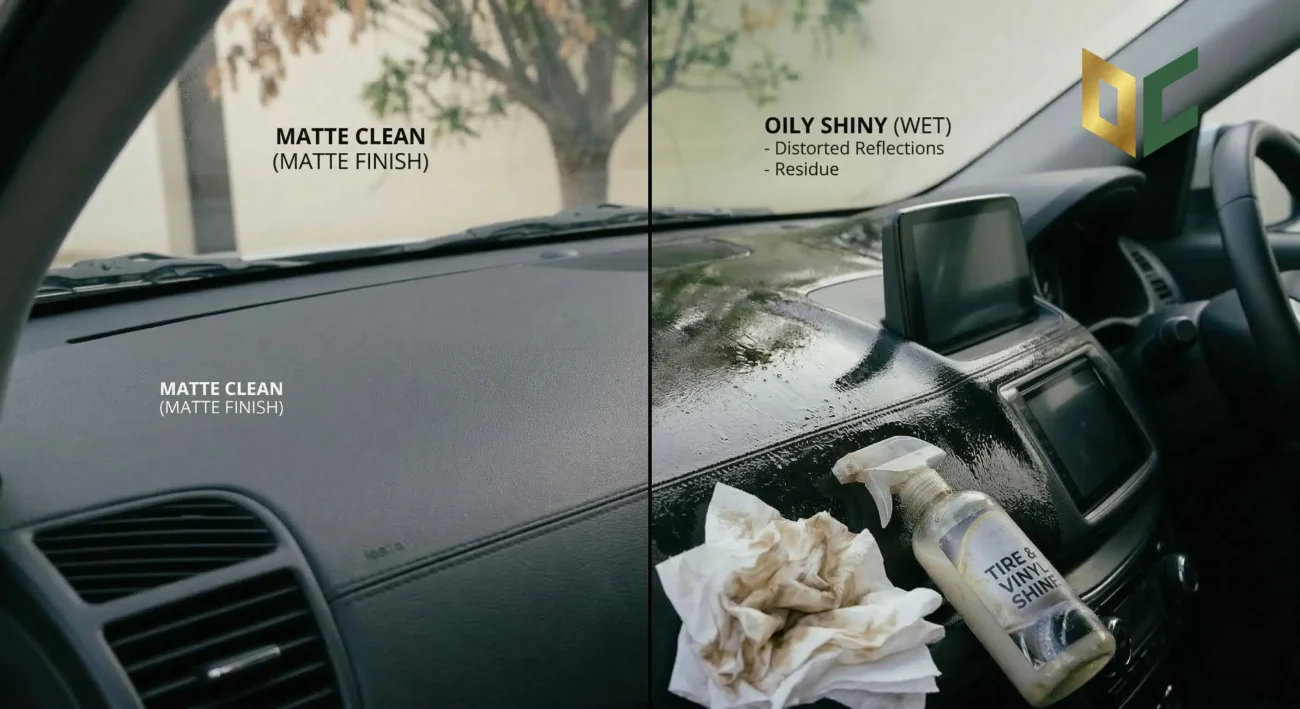
- Leave a greasy shine
- Create slippery residue
Alcohol-based cleaners are especially problematic. They evaporate quickly but remove essential moisture from plastic surfaces, increasing the risk of cracking — especially in hot climates.
If you’re searching for the best car dashboard cleaning plastic, the answer isn’t stronger chemicals — it’s smarter formulation.
To clean car interior without damage, you need:
- Low foam action
- Non-drying ingredients
- Residue-free finish
- Surface-safe formulation
How to Clean Car Dashboard Safely
Here’s a practical, surface-friendly method to maintain your dashboard.
Step 1: Remove Loose Dust
Use a soft microfiber cloth to gently remove loose particles.
Avoid:
- Dry paper towels
- Rough fabrics
- Hard brushing
This prevents dust from scratching the surface during cleaning.
If your goal is to remove dust from dashboard safely, gentle wiping is key.
Step 2: Use Enzyme-Based Car Interior Wipes
Choose car interior wipes that use:
- Enzyme enhanced cleaning
- Non-ionic surfactants
- Low foam formulation
An enzyme-enhanced cleaner works by breaking down organic stains like body oils and grime without aggressive chemical stripping.
Non-ionic surfactants lift dirt away without leaving a heavy residue.
Unlike traditional sprays, these wipes:
- Don’t over-saturate the surface
- Don’t leave slippery film
- Provide a residue-free finish
This is one of the safest ways to car dashboard cleaning safely while protecting the material.
Step 3: Wipe Gently (No Scrubbing)
Apply light pressure and wipe in even strokes.
Avoid:
- Hard scrubbing
- Circular aggressive motion
- Excessive product layering
Scrubbing can wear down textured surfaces and remove protective coatings.
If you’re wondering how to car dashboard cleaning without cracking, gentle technique matters as much as product choice.
Step 4: Let Surface Dry Naturally
Allow the surface to air dry.
Avoid:
- Hair dryers
- Direct heat exposure
- Additional chemical layering
A quality dashboard cleaner should dry naturally without streaks or shine.
The goal is a clean, matte look — not artificial gloss.
Why Enzymatic Car Interior Wipes Are Safer
Modern enzyme-based cleaners represent a shift in surface care technology.
Here’s why they work well for car interiors:
1. Enzyme Action on Organic Residue
Enzymes break down organic buildup like sweat oils and dust grime without aggressive solvents.
2. Non-Ionic Surfactants
These lift and suspend dirt without over-foaming. That means no sticky film left behind.
3. Residue-Free Finish
Properly formulated wipes leave surfaces clean and natural-looking — not greasy.
4. Matte, Natural Appearance
Instead of high-gloss shine, enzyme-enhanced wipes help restore natural shine without slipperiness.
5. Leatherette Safe Cleaning
Many dashboards include leatherette trims. Harsh chemicals can damage them, while gentle wipes support leatherette safe cleaning.
If you’re concerned about safety, a non-toxic car cleaner offers peace of mind — especially for families or car dealerships maintaining multiple vehicles.
Surfaces You Can Clean Safely
A high-quality dashboard-safe cleaner can typically be used on:
- Dashboard panels
- Steering wheel
- Door panels
- Center consoles
- Gear shift areas
- Touch screens (when used gently)
- Leatherette surfaces
Always follow product instructions, but a properly designed car dashboard cleaner should support overall safe car interior cleaning.
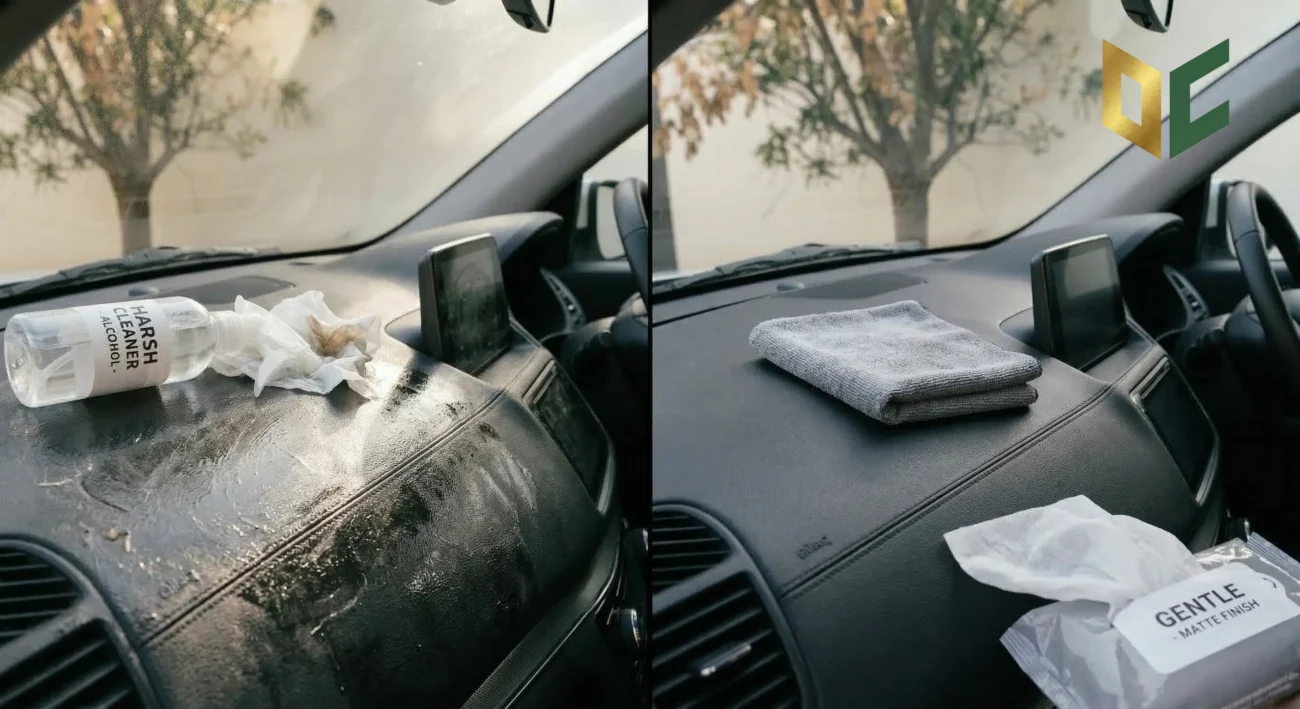
Quick Comparison: Harsh vs Safe Cleaning
Harsh Interior Cleaner:
- Strong chemical smell
- Alcohol-based
- Can cause drying
- Leaves shiny, slippery finish
Enzyme-Based Interior Wipes:
- Mild fragrance
- Low foam
- Non-drying formula
- Residue-free finish
- Natural matte appearance
If your goal is to clean car interior without damage, formulation matters more than strength.
Final Thoughts: Protect First, Clean Second
Your dashboard isn’t just plastic — it’s constantly exposed to heat, sunlight, and touch. Cleaning it incorrectly can shorten its lifespan.
The safest approach is simple:
- Remove dust gentle
- Use enzyme-based car interior wipes
- Avoid alcohol and ammonia
- Aim for a natural, matte finish
You don’t need aggressive chemicals to maintain a clean interior. Modern cleaning science provides smarter solutions that protect while they clean.
If you want to clean car dashboard safely and maintain its look for years, choose a surface-friendly, residue-free method that respects your car’s interior — not one that risks damaging it.
FAQs
Q. Can I use kitchen cleaner on car dashboard?
No. Kitchen cleaners may contain strong degreasers or acids not suitable for automotive plastics. Always use products designed for car interiors.
Q. Does alcohol damage car interiors?
Frequent use of alcohol-based cleaners can dry plastic and contribute to cracking over time, especially in hot environments.
Q. Are car interior wipes safe for daily use?
Yes, when they are low foam and formulated without harsh solvents. Choose wipes specifically labelled safe for car interiors.
Q. How do I restore dashboard shine without grease?
Avoid oily sprays. Instead, use a cleaner that restores natural shine and leaves a matte, residue-free finish.
Q. What is the safest way to clean plastic car interiors?
Use a non-toxic car cleaner with enzyme-enhanced cleaning and non-ionic surfactants. Wipe gently and allow to air dry.