


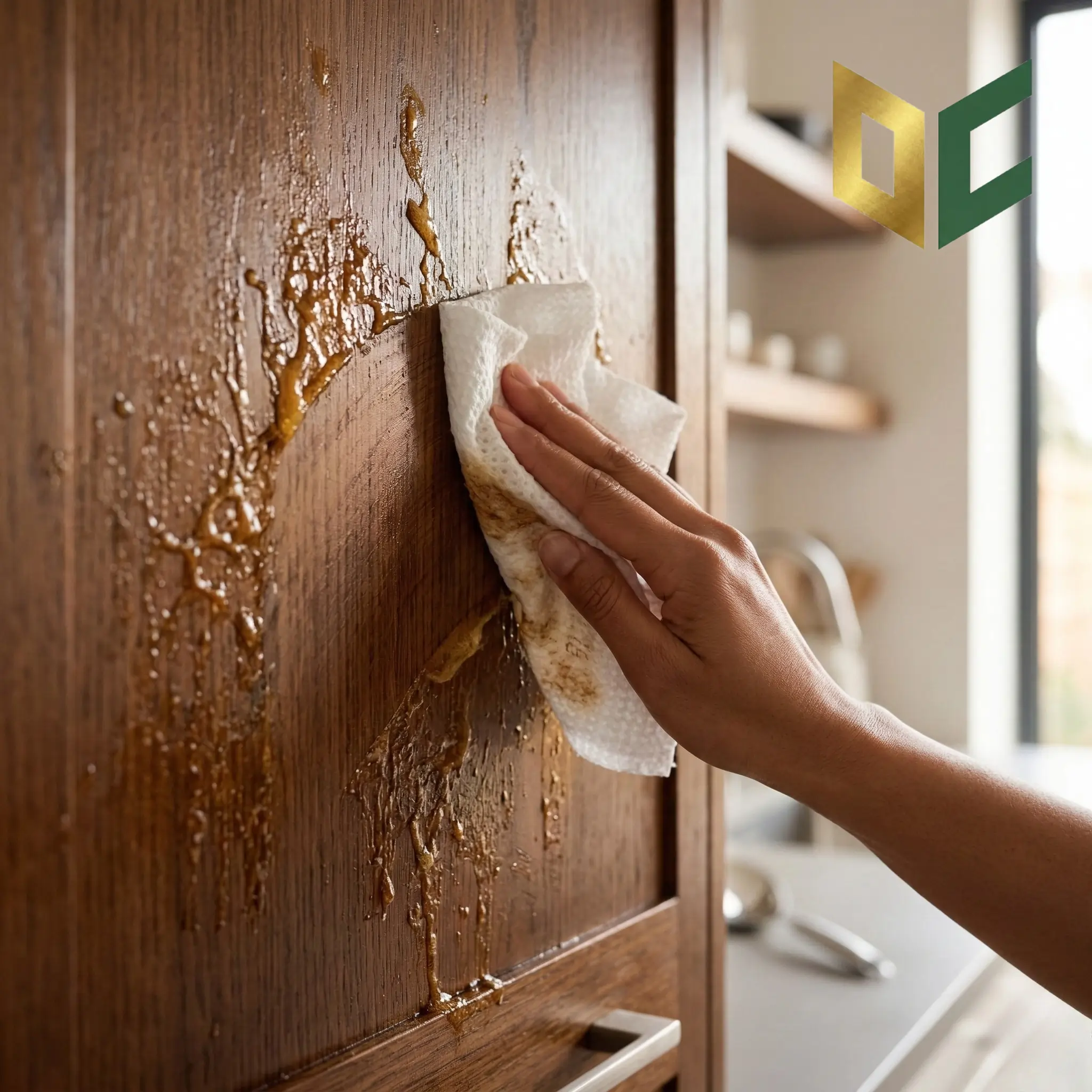
Oil splatters on the stove. Sticky cabinet doors. A greasy film on countertops that seems to return no matter how often you clean.
For years, most people have reached for bleach or strong chemical sprays to deal with these problems. The logic feels simple: grease is tough, so you need something tougher.
But harsh cleaners come with trade-offs.
Strong fumes. Surface dullness. Chemical residue near food prep areas. And for families with children or pets, that lingering smell can be a real concern.
The good news? You can remove grease without bleach — effectively, safely, and without compromising on performance. Modern cleaning science now offers smarter alternatives that break down oil naturally instead of aggressively stripping it away.
In this guide, we’ll explore what causes kitchen grease buildup, why traditional degreasers can be harsh, and how to clean oily surfaces using safer, enzyme-powered solutions.
Why Traditional Degreasers Can Be Harsh
Traditional kitchen degreasers often rely on:
- Bleach
- Strong alkaline solvents
- Heavy foaming detergents
- Synthetic chemical surfactant
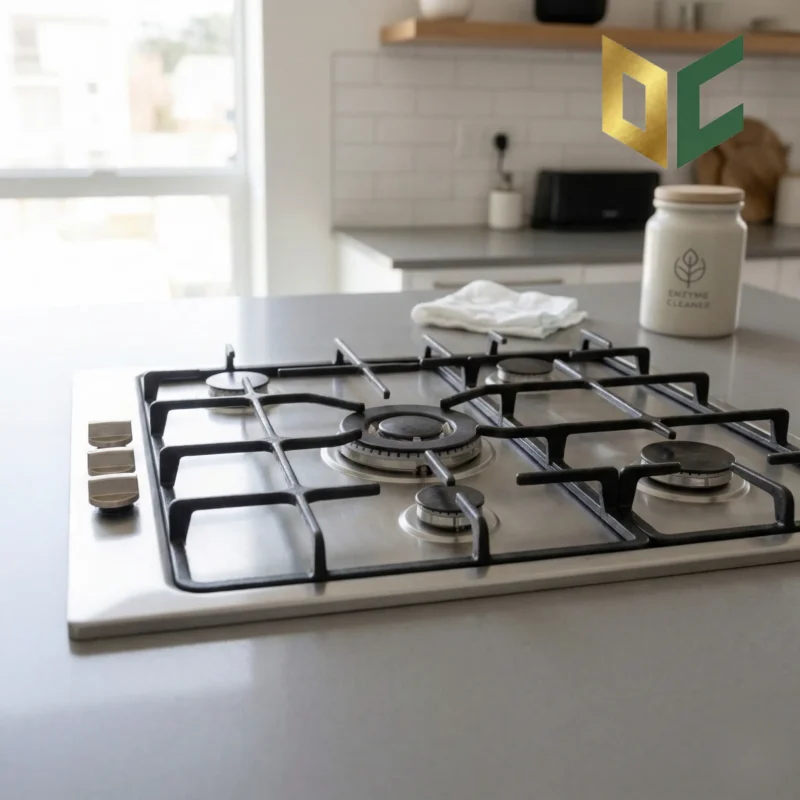
These products work by chemically dissolving grease and oxidizing stains. While they can be effective, repeated use may lead to:
- Surface wear or dullness
- Strong lingering odor
- Residue buildup
- The need for thorough rinsing
Over time, bleach-based or solvent-heavy products can strip protective finishes from cabinets and countertops. That’s why many homeowners are now searching for a chemical free kitchen cleaner or a non toxic grease remover that’s suitable for everyday use.
Harsh chemicals may remove grease quickly — but they aren’t always ideal for frequent cleaning in food-prep spaces.
What Actually Causes Kitchen Grease Buildup?
To clean grease effectively, it helps to understand how it forms.
When you cook:
- Oils vaporize from pans.
- Microscopic oil droplets rise into the air.
- These droplets mix with dust particles.
- They settle on cabinets, walls, chimneys, and countertops.
Over time, this combination of oil splatter, food stains, and airborne particles forms a sticky residue. The longer it sits, the harder it becomes to remove.
That’s why greasy cabinets often feel tacky — it’s not just oil, but layers of oil mixed with dust and cooking vapors.
Understanding this process is key if you want to remove oil from kitchen surfaces efficiently without damaging them.
How to Remove Grease Without Bleach (Step-by-Step)
If you’re wondering how to remove cooking grease naturally, here’s a practical, surface-safe approach.
Step 1: Identify the Surface Type
Before cleaning, determine what you’re working with:
- Stainless steel stove tops
- Laminated cabinets
- Painted wooden doors
- Ceramic tiles
- Marble or granite counters
Different surfaces respond differently to harsh solvents. This is where a safe degreaser for kitchen counters becomes important.
Step 2: Use an Enzyme-Based Grease Cleaner
Instead of bleach, choose an enzyme based grease cleaner.
Here’s how it works:
- Enzyme technology targets organic oils.
- It breaks down grease at a molecular level.
- Non-ionic surfactants lift and suspend loosened oil.
- The solution wipes away cleanly.
Unlike heavy chemical stripping, this method uses deep penetrating cleaning action to dissolve oil buildup naturally.
Many modern households now use kitchen degreasing wipes that contain enzyme-powered formulas. These wipes offer:
- Controlled application
- No over-spraying
- Easy, targeted cleaning
- Minimal chemical exposure
This is one of the most effective ways to remove grease without bleach while maintaining surface integrity.
Step 3: Wipe & Finish
After applying the enzyme-based solution:
- Let it sit briefly to activate.
- Wipe gently with a clean cloth.
- Allow it to air dry.
Because enzyme cleaners often use a low foam formula, there’s:
- No heavy suds
- No excessive rinsing
- No sticky film
The result is a residue-free finish — without the chemical smell associated with bleach-based products.
Why Enzyme-Based Cleaners Work Better on Oil & Food Stains
Grease and food stains are organic substances. That means they respond particularly well to biological cleaning methods.
An eco friendly kitchen grease remover that uses enzymes works differently from traditional degreasers.
Instead of burning through oil, enzymes:
- Attach to grease molecules
- Break them into smaller particles
- Allow surfactants to lift them away
This process is highly effective for:
- Sticky residue
- Food stains
- Oil splatter around the stove
Because enzyme cleaners don’t rely on corrosive agents, they avoid surface stripping. That makes them suitable for daily cleaning routines — especially for people who cook frequently.
If you’ve been searching for the best way to clean oily kitchen cabinets, enzyme-based products offer a balanced solution: powerful yet gentle.
Safe Surfaces for Chemical-Free Degreasing
One of the biggest advantages of removing grease without bleach is surface safety.
Enzyme-powered cleaners can typically be used on:
- Kitchen countertops
- Stove tops
- Cabinets
- Appliance exteriors
- Dining tables
- Chimneys and backsplash tiles
When used as directed, many formulations are suitable for food-prep areas, making them a practical non toxic grease remover option for family kitchens.
Always follow label instructions, but compared to harsh degreasers, enzyme-based solutions are generally more surface-friendly.
Benefits of Low-Foam Kitchen Cleaning
Traditional degreasers often create thick foam, which can:
- Leave streaks
- Require extra rinsing
- Trap residue
A low foam kitchen cleaner offers several advantages:
- Faster cleanup
- Less water usage
- No heavy residue
- Easier wiping
Low foam kitchen cleaner benefits also include a more polished finish on stainless steel and glass surfaces — without cloudy streaks.
For busy households, that means quicker cleaning and fewer repeat passes.
Who Should Avoid Harsh Chemical Degreasers?
While traditional degreasers have their place, they may not be ideal for:
- Families with young children
- Pet owners
- People sensitive to strong fumes
- Small apartment kitchens with limited ventilation
- Frequent home cooks
If your kitchen is used daily, repeated exposure to strong chemical vapors can be uncomfortable.
That’s why many households now choose to remove grease without bleach using enzyme-based alternatives that prioritize both performance and safety.
Quick Comparison: Harsh vs Enzyme-Based Grease Removal
Harsh Degreaser:
- Strong smell
- Requires thorough rinsing
- May cause surface wear over time
- Heavy foam buildup
Enzymatic Grease Cleaner:
- Mild fragrance
- Low foam
- Surface-safe
- Suitable for daily use
- Plant-derived cleaning ingredients
The difference lies not just in cleaning power — but in how that power is delivered.
Final Thoughts: A Smarter Way to Tackle Kitchen Grease
Grease buildup is inevitable in any active kitchen. But harsh chemicals don’t have to be part of your cleaning routine.
Thanks to modern enzyme technology, you can now remove grease without bleach while protecting your surfaces and reducing chemical exposure in food-prep areas.
A well-formulated enzyme based grease cleaner offers:
- Deep penetrating cleaning
- Residue-free finish
- Low foam convenience
- Safer everyday use
You don’t need overpowering fumes or aggressive solvents to maintain a spotless kitchen.
Switch to enzyme-powered grease removal for a cleaner, safer kitchen — and experience the difference modern cleaning science can make.
FAQs
Q. How do you remove grease without bleach?
You can use an enzyme-based cleaner that breaks down oil naturally. These cleaners rely on biological action rather than chemical stripping, making them effective and safer for frequent use.
Q. Do enzyme cleaners remove oil stains?
Yes. Enzymes specifically target organic matter like oil and food residue, breaking it down for easier removal.
Q. Is bleach necessary for kitchen degreasing?
No. Bleach disinfects but does not specifically break down grease molecules. Enzyme-powered products are often more targeted for oil removal.
Q. What is the safest way to clean greasy cabinets?
Use a non-toxic grease remover with a low foam formula. Avoid harsh solvents that may damage finishes or paint.
Q. Can enzymatic cleaners be used daily?
Yes, most are designed for routine cleaning and are suitable for maintaining kitchen hygiene when used as directed.
Q. Do non-toxic grease removers really work?
Yes. Modern enzyme technology allows plant-derived cleaning solutions to effectively remove sticky residue and oil buildup without harsh chemicals.